
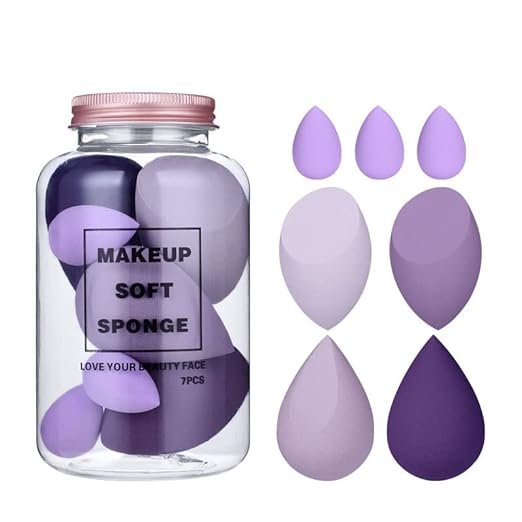
Makeup Sponge
A makeup sponge—often called a beauty sponge or blender—is a soft, porous, and reusable applicator tool designed to seamlessly blend liquid, cream, and powder cosmetics into the skin. Made famous by the iconic teardrop-shaped Beautyblender, these sponges have revolutionized the cosmetics industry by offering an alternative to traditional brushes. They are engineered using advanced, hydrophilic (water-loving) polyurethane foam. When wet, the sponge expands to twice its size, absorbing water instead of your expensive makeup. This allows the product to sit strictly on top of the sponge, transferring effortlessly to your skin for a streak-free, airbrushed finish. Key Shapes and Their Uses Teardrop Shape: The classic design. The large, rounded bottom is perfect for quickly bouncing foundation across broad areas like the cheeks and forehead. The pointed tip offers precision for tight areas, such as blending under-eye concealer or tapping product around the nose. Flat-Edged / Wedge Shape: Features a flat, angled cut on one or more sides. This edge is excellent for flat-pressing setting powder under the eyes and along the jawline for “baking.” It is also highly effective for creating sharp, clean lines when carving out a contour. Hourglass Shape: Designed with a pinched middle, making it easy to grip during fast application. The dual rounded ends provide versatility for separating your foundation application from your blush or bronzer. Micro / Mini Sponges: Miniature versions of the teardrop shape. These are specialized tools meant strictly for targeted spot concealing, inner-eye brightening, or blending cream eyeshadows. Key Product Benefits & Features Flawless, Streak-Free Finish: Unlike brushes, which can leave faint lines or streaks behind, a sponge uses a stippling (bouncing) motion. This mimics the natural texture of the skin, resulting in a finish that looks like a second skin. Controlled, Buildable Coverage: Because the sponge is damp, it naturally shears out heavy foundations, giving you total control. You can lay down a sheer tint or build up multiple layers for full coverage without the makeup ever looking cakey or heavy. Versatility Across Formulas: A single sponge can handle your entire liquid and cream routine—including primer, foundation, concealer, cream blush, and liquid contour. It can even be used to press translucent powder into oily zones to set the face. Soothing on Textured Skin: For individuals dealing with dry patches, flakiness, or active acne, brushes can micro-exfoliate the skin and accentuate texture. A damp sponge gently presses product over texture without irritating or disrupting the skin. How to Use a Makeup Sponge Correctly Wet It Completely: Submerge the sponge under running water and squeeze it repeatedly until it fully expands to its maximum size. Squeeze Out Excess: Wring out all the water thoroughly. Then, squeeze it one final time inside a clean towel. The sponge must be damp, not wet. Bounce, Don’t Swipe: Apply your makeup to your face or the sponge, and use a continuous bouncing or tapping motion (stippling) across the skin. Never drag, wipe, or rub the sponge across your face, as this drags the product off and creates streaks. Clean After Use: Wash the sponge after every use with a gentle solid soap or liquid cleanser to remove trapped pigment, oils, and bacteria. Lifespan and Hygiene Because makeup sponges stay damp and contact the skin daily, they are prone to harboring bacteria and mold if neglected. Drying: Always dry your sponge in an open, well-ventilated area. Never lock a damp sponge inside a dark, unventilated makeup bag or drawer. Replacement: Even with daily washing, the foam material naturally degrades over time, losing its bounce and developing micro-tears. To keep your skin clear of breakouts, replace your makeup sponge every 1 to 3 months. Would you like me to generate a list of optimized tags for a makeup sponge, or would you like to see a comparison between using a brush versus a sponge?